
Capability 03 / Civils and groundworks
Civils that let the wiring team start on day one.
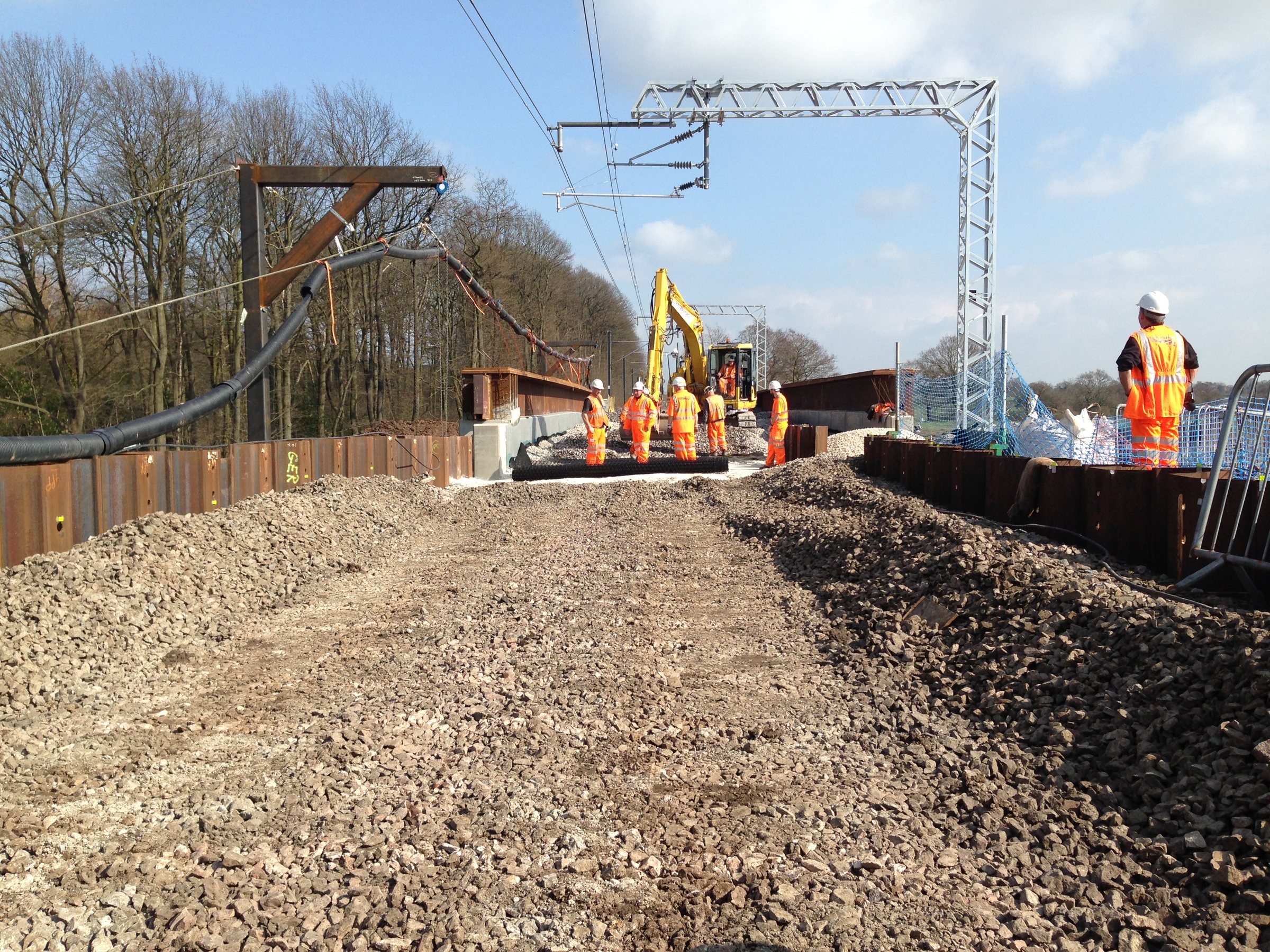
Piled foundations, access roads, troughing routes and enabling works. Self-delivered and sequenced to the electrification schedule, so OLE and HV teams arrive to a site that is ready to build on.
- ECI entry point
- GRIP 2
- Rail-mounted rigs
- Piled foundations
- Own plant and crews
- Self-delivered
01What we deliver
Every enabling task, sequenced to the programme.
- 01Piled foundations for OLE masts and portals
- 02Reinforced concrete foundations for feeder stations
- 03Access roads and RRAP pads
- 04Cable troughing routes (concrete and GRP)
- 05Drainage, fencing and security
- 06Compound set-up, welfare and site infrastructure
- 07Permanent way interface works
- 08Demolition and site clearance
- 09Environmental mitigation and ecology management
02Why self-deliver
Civils failures are the leading cause of OLE slippage.
A foundation that fails its test. An access road that washes out. A troughing run that arrives three weeks late. Each can cost a possession, and possessions cannot be recovered.
We self-deliver civils so the schedule has one owner, the risk register has one format, and the commissioning engineer does not arrive to find a foundation that is not their problem to solve.
- Foundation standard
- Tested
- Piling rigs and plant
- In-house
- To OLE and HV
- Sequenced
- Design philosophy
- Possession-aware
01Early contractor involvement
The possession risk of the whole scheme is set at GRIP 2.
Where clients allow it, we engage at GRIP 2 to influence foundation strategy and access planning. The decisions made at this stage set the possession risk for the whole scheme.
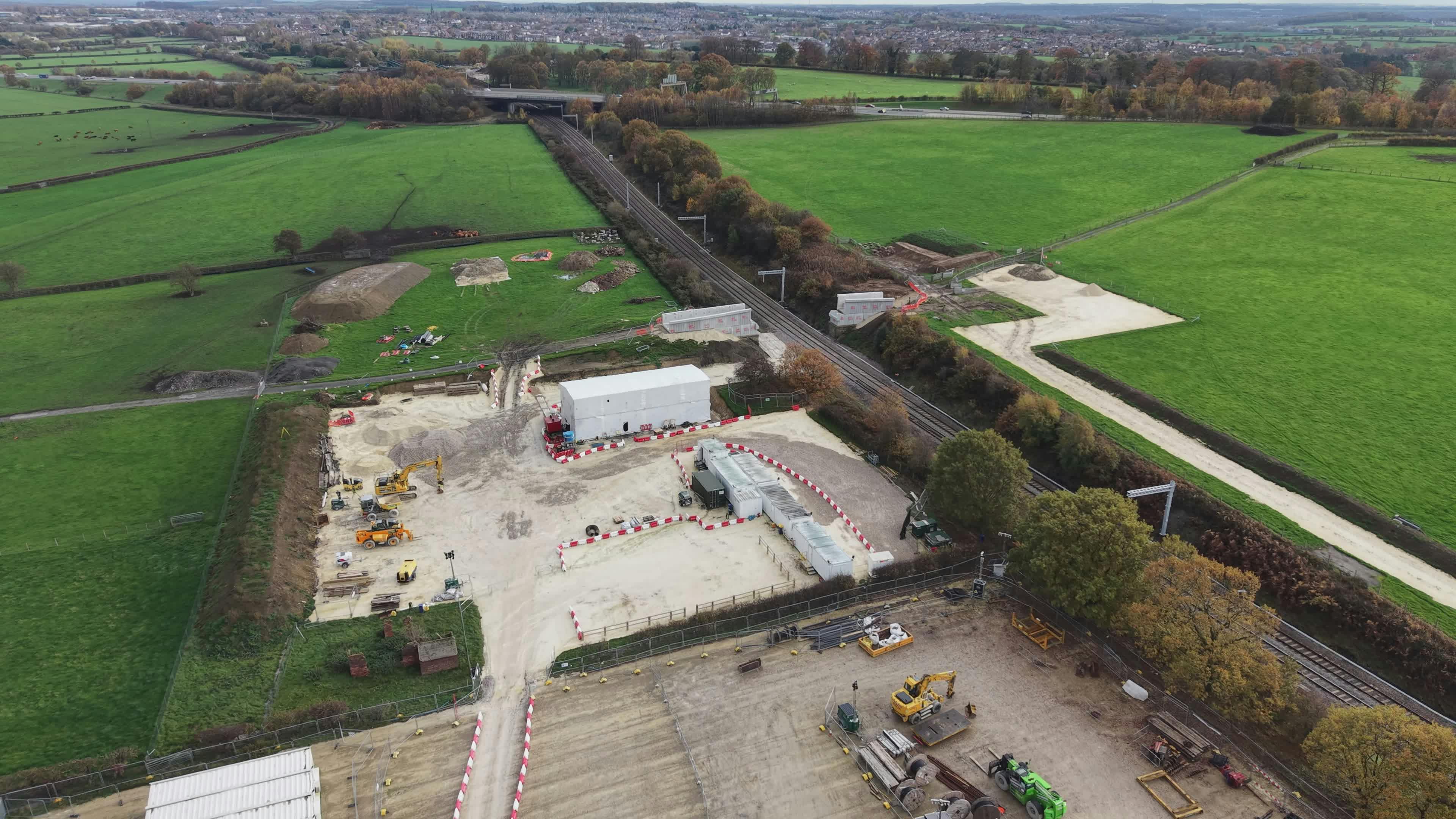
Fig. 5.2Access planning seen from above: a compound, a haul road and new structures set out beside an electrified railway. 02Ground investigation and design
Foundations designed for the possession window that will install them.
In-house geotechnical interpretation and foundation design. We design foundations that can be installed inside the possession windows the OLE programme assumes.
Ground investigation: borehole logRCI-05-BIndicative strata. Not to scale. Drag sideways to pan. 03Install
Own plant. Own crews. Known location next Tuesday.
Our own piling rigs, excavators, concrete pumps and rail-mounted plant. Self-delivered means we know where the rig will be next Tuesday, because it is ours.
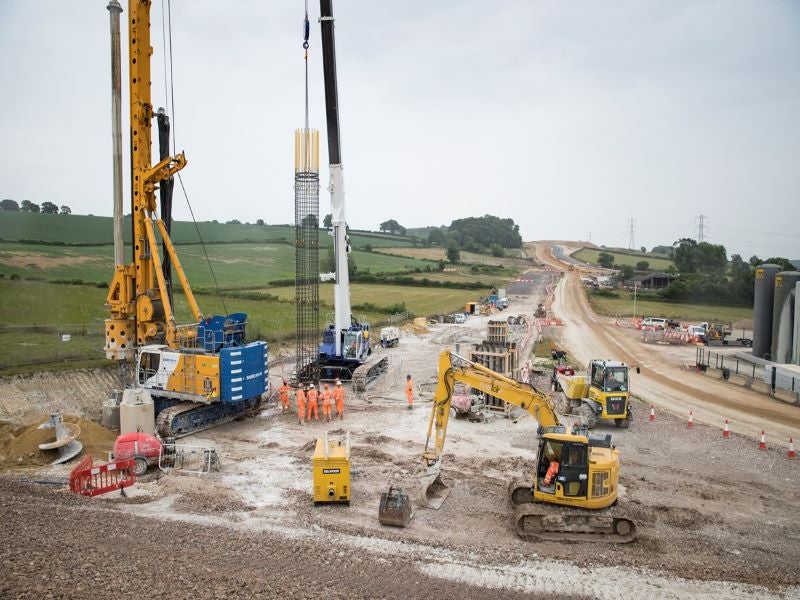
Fig. 5.3A piling rig and crane place a reinforcement cage for a bored foundation. 04Interface
Foundation complete, mast erected, wire up: one sequence.
Civils sits upstream of OLE and HV. We plan the handover from foundation complete, to mast erected, to wire up as one sequence, not three.
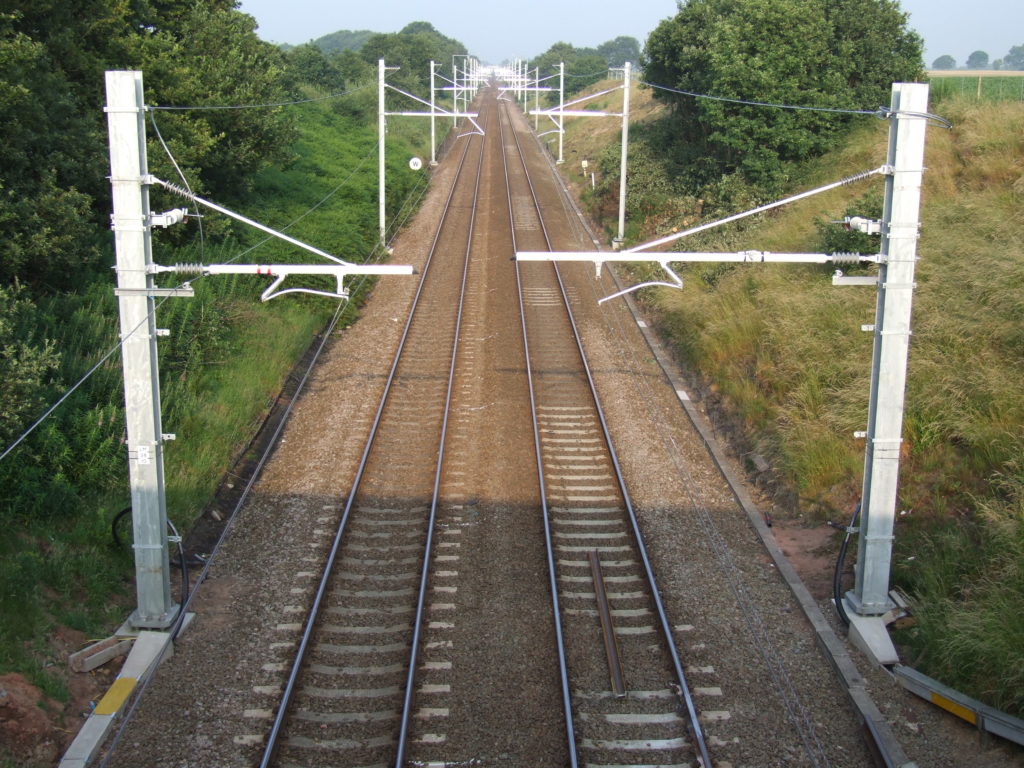
Fig. 5.4Foundations, masts, cantilevers and wires: the finished sequence on a two-track main line.
03Typical scheme
The shape of a civils scope we would take on.
- Duration
- 3 months to 3 years
- Team size
- 4 to 30 per crew
- Value band
- £250k to £20m+
- Settings
- Mainline rail, metro, depot and HV substation sites
- Scope
- Enabling works, foundations, access and troughing
04Civils projects
Where this capability has been put to work.
Civils Scotland
On siteScotland electrification: enabling civils.
Piled foundations, access roads and troughing on a major Scottish electrification route. Sequenced to the wiring programme and handed over on each possession boundary.
Network Rail Scotland (via prime)
Civils Midlands
DeliveredHigh-speed rail enabling works package.
Civils, groundworks and access-road package supporting a major HS2 site. Coordinated with multiple principal contractors operating in parallel.
HS2 tier-one contractor
Accredited
- RISQS
- Link-up
- ISO 9001
- ISO 14001
- ISO 45001
- Constructionline
- CHAS
- Achilles UVDB
Next step
Need enabling civils that match the electrification programme? Start with a scope review.
Scope reviews, ECI proposals and PQQ support. First response within one working day.